
How Long It Really Takes: The Short Answer
A confident, noise-tolerant cat usually starts using an automatic litter box within three to seven days. A mildly cautious cat typically takes one to three weeks. A senior, anxious, or noise-sensitive cat can take three to six weeks, and sometimes longer, and none of those timelines mean anything has gone wrong. I have run automatic boxes for five years with three cats, Mao, Leo, and Deo, and all three landed in a different band on the same device.
The driver is temperament, not luck. Once you know which band your cat is likely in, a slow week stops looking like failure and starts looking like exactly what it is: normal. The rest of this piece breaks down the three bands, why the first week of the introduction changes the math more than people expect, and how to tell a transition that is working slowly from one that has actually stalled.
The Three Temperament Bands
You can usually place your cat in a band within the first day or two of introducing the box, before you know how long acclimation will take. One published temperament-based breakdown, from a self-cleaning litter box manufacturer's own guide rather than an independent study, splits it this way. Treat the exact day counts as directional, not a guarantee, but they line up with what most transition guides describe in a softer, unbroken "days to a few weeks" range.
| Temperament band | What it typically looks like | Typical timeline |
|---|---|---|
| Confident, noise-tolerant | Investigates the box right away, unbothered by the cleaning cycle once it starts | 3 to 7 days |
| Mildly cautious | Sniffs and watches from a distance first, needs several sessions before committing | 1 to 3 weeks |
| Senior, anxious, or noise-sensitive | Avoids the room during cycles, often needs the box moved, delayed, or run manually longer | 3 to 6 weeks, some longer |
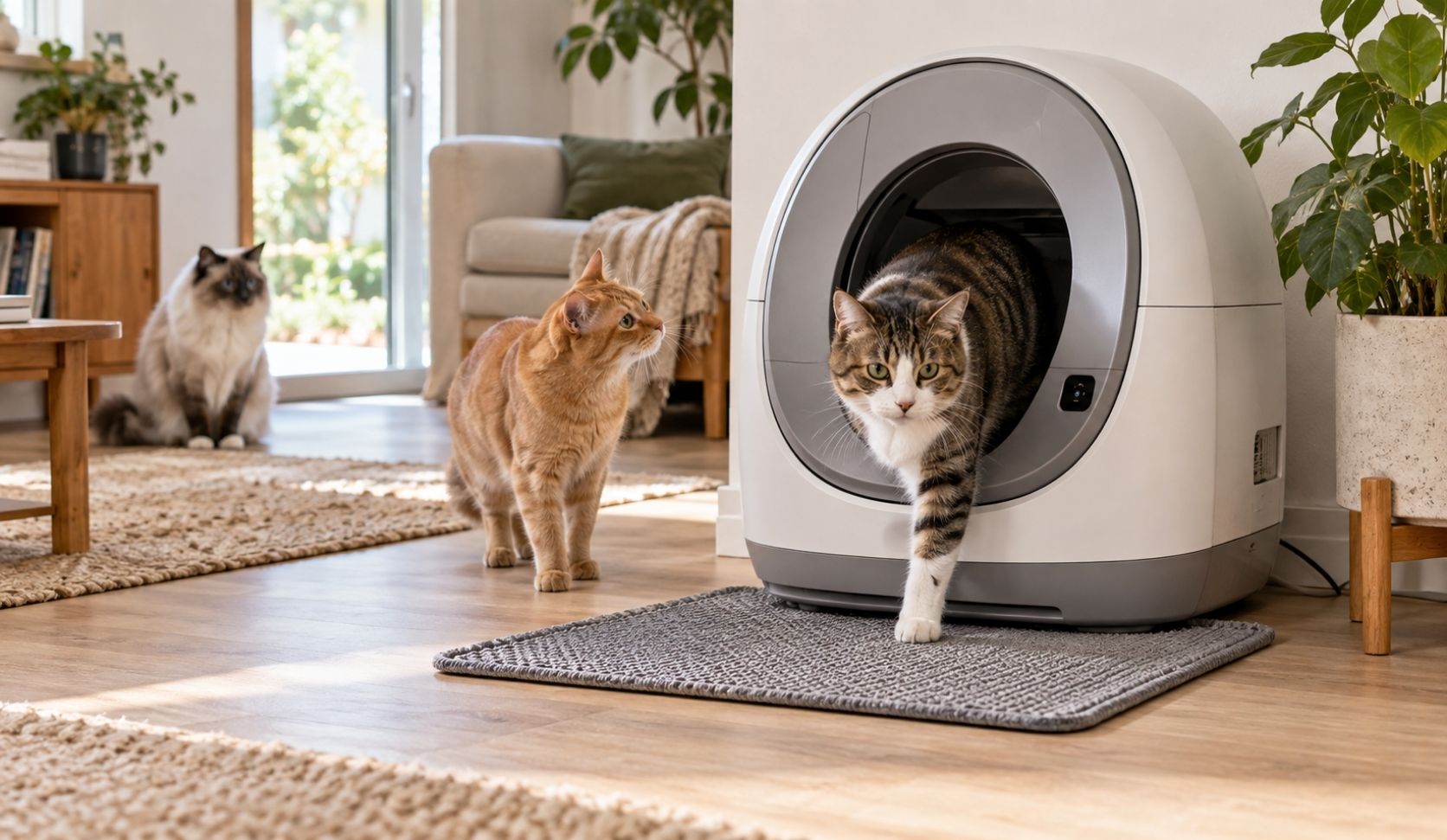
One manufacturer, Litter-Robot, reports that over 95 percent of cats eventually acclimate, based on stated return reasons over a year of sales. That is a vendor-reported figure, not an independently verified one, but it matches the general pattern across guides: slow is common, permanent refusal is rare. In my own three-cat home, the bands never lined up with each other. Leo, the most confident of the three, used the new box within a day, no coaxing needed. Mao is cautious by nature and needed the full first week, mostly just watching, before he would commit. Deo split the difference, landing somewhere between the two. Same box, same household, three different timelines, because temperament was the variable, not the box. If you own more than one cat, expect that: one holdout does not mean the introduction failed for anyone else, and running one automatic box across a multi-cat household works better once you stop expecting every cat to be on the same schedule.
Why the Week-One, Automation-Off Method Changes the Math
The single biggest lever on that timeline is not the cat, it is the introduction. I keep the automation switched off entirely for the first week, so the cat can use the box the way it uses any litter box: no motor, no rake, no cycle sound firing while it is still inside. That one change moves a lot of cautious cats into the confident band's timeline, because the fear response most owners see is not really about the box's shape or brand. It is about being startled mid-use. That count also starts on the day your cat can actually reach and enter the box, not the day it arrives in a shipping box in your hallway, which is an easy mixup that makes some timelines look longer than they really are.
I have written up the full method separately, including exactly when to switch the automation on, so I will not repeat the steps here. What matters for the timeline is the math itself: a cat that gets a genuinely quiet first week often clears the faster range even if its baseline temperament leans cautious, while a cat whose automation runs from day one can drift toward the slow end of its band, or past it entirely. Standard guidance across the transition guides I checked also agrees on keeping the old, manual box available alongside the new one for at least one to two weeks before removing it, regardless of which band your cat falls into.
Telling "Slow but Working" from "Stalled"
Slow but working has a recognizable shape. The cat is still eating and eliminating normally, is investigating the new box a little more each day even without fully committing, and is not avoiding the litter area altogether. That is ordinary caution, not distress, and learning to read the difference matters, because the two can look similar for the first few seconds and then diverge. A cat that stops using any litter box at all, not just the new one, or one that seems to be in real discomfort, has crossed from a timeline question into a health question, and that is a conversation for your vet, not another week of patience.
A few concrete signs that "slow" is still "working": your cat sniffs or steps into the box for longer each session, uses the new box for part of the day while choosing the old one for the rest, or stops avoiding the general area even before it fully commits to going inside. Regression, a cat that used the box happily for months and then suddenly stops, is a different situation with its own causes. Plain slowness that keeps inching forward, session by session, is not.
If you are past six weeks with a senior or anxious cat and seeing zero movement, not slow movement, that is the point to stop calling it slow and start troubleshooting the setup itself: placement, litter type, or whether this particular unit is ever going to suit this particular cat. That is a different piece of the puzzle than acclimation speed, and it deserves its own honest answer rather than more waiting.
Frequently Asked Questions
How long does it take for a cat to get used to an automatic litter box?
Most cats start using one within days to about a week if they are confident and noise-tolerant. Mildly cautious cats often take one to three weeks, and senior, anxious, or noise-sensitive cats can take three to six weeks or longer. A slow timeline on its own is not a sign the introduction failed.
Why is my cat still avoiding the automatic litter box after two weeks?
Two weeks is well within normal range for a mildly cautious cat, and not unusual for an anxious or senior one. Check that the automation has actually been off during this period, that the old box is still available, and that placement has not changed. Also check whether the litter type changed at the same time, since changing two variables at once is one of the most common reasons a transition drags on longer than the bands above suggest. If your cat is still eating and eliminating normally elsewhere, this is very likely still "slow," not "stalled."
Does keeping the old litter box around slow down the transition?
No. Keeping the old, manual box available alongside the new one for at least one to two weeks is standard guidance, not a workaround. Removing it too early is more likely to cause a setback than leaving it in place.
Is it normal for one cat to adjust faster than another in the same home?
Yes. Temperament, not household routine, drives the timeline, so in a multi-cat home it is common for one cat to accept the box within days while another takes a month on the identical unit.
What if my cat still will not use the automatic litter box after a month or more?
A month of genuine, gradual progress is still within range for a cautious or anxious cat, so keep going if you are seeing small improvements. If there has been no progress at all for weeks, that is a different question than timing, and worth a closer, honest look at whether this unit will ever work for this cat.